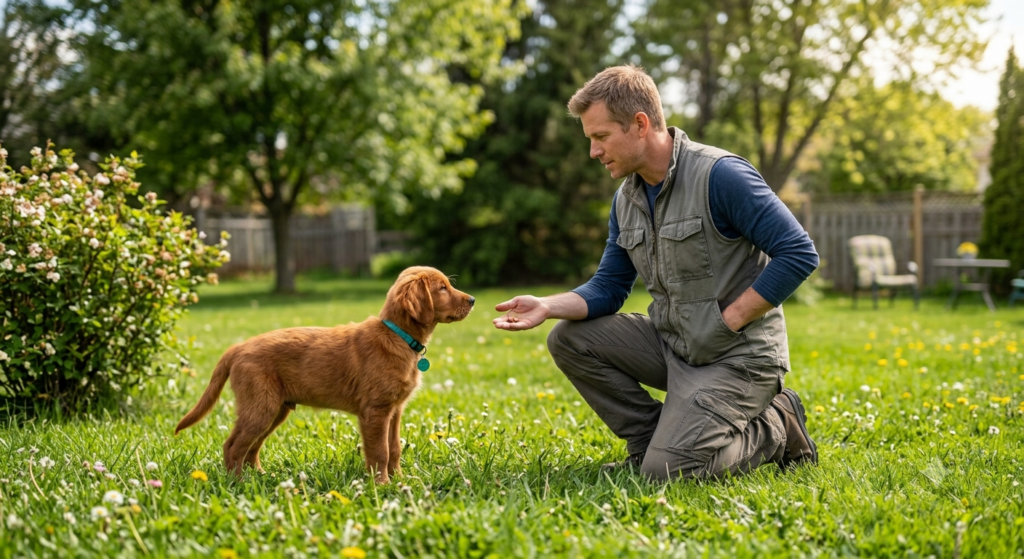
Dog 🐶 Training | 📅 June 2025 | ⏱ 7 min read(Pad Training a Dog)
Not every dog owner has easy access to the outdoors. If you live in a high-rise apartment, deal with harsh winters, or have a small breed dog, pad training could be the perfect solution. This complete guide will walk you through every step of pad training your dog — in simple, easy-to-follow language.
📌 Key Takeaways Pad Training
- Pad training is ideal for small breeds, apartments, and cold climates.
- Restrict your dog’s access to the house until they are fully trained.
- Never punish accidents — always use positive reinforcement.
- Take your dog to the pad every 2–3 hours and after meals, sleep, and play.
- Gradually reduce the number of pads until only one remains in the designated spot.
- Full pad training takes about 2–4 weeks with consistency.

Teach your dog to go, stay, and succeed on their pad 🐾
What Is Pad Training a Dog?
Pad training (also called potty pad training or pee pad training) means teaching your dog to urinate and defecate on a specific indoor pad instead of going outside. The pad acts like a designated bathroom spot inside your home.
It’s especially useful for situations where going outside isn’t always easy or possible.
Who Is Pad Training Best For?
🏢
Apartment Dwellers
Going outside many times a day isn’t always practical in a high-rise building.
❄️
Cold Climates
Harsh winters (like Minnesota!) make outdoor trips uncomfortable for small dogs.
🐩
Small Breeds
Tiny dogs have tiny bladders — indoor pads reduce stress for both dog and owner.
👴
Senior Dogs
Older dogs with mobility issues benefit greatly from indoor pad access.
🏥
Recovering Dogs
Dogs healing from surgery or illness need indoor bathroom options.
👶
Young Puppies
Puppies under 12 weeks can’t hold their bladder long enough for outdoor-only training.
What You Need Before You Start Pad Training a Dog
Before pad training begins, gather these essentials:
🛒 Pad Training Essentials
📄
Potty Pads
Buy absorbent, leak-proof pads — scented ones attract dogs more effectively
📦
Pad Holder / Tray
Keeps the pad in place and prevents your dog from dragging it around
🧴
Enzymatic Cleaner
Nature’s Miracle or similar — removes odors completely so dogs don’t revisit accident spots
🦴
Small Treats
Use tiny, high-value treats for immediate reward after successful pad use
🔗
Leash (Indoor)
Keep your dog on leash indoors so you can guide them quickly to the pad
🏠
Playpen or Crate
Restricts access when you can’t supervise — key to avoiding accidents

A calm dog starts with training — easy to teach, builds great habits 🦴
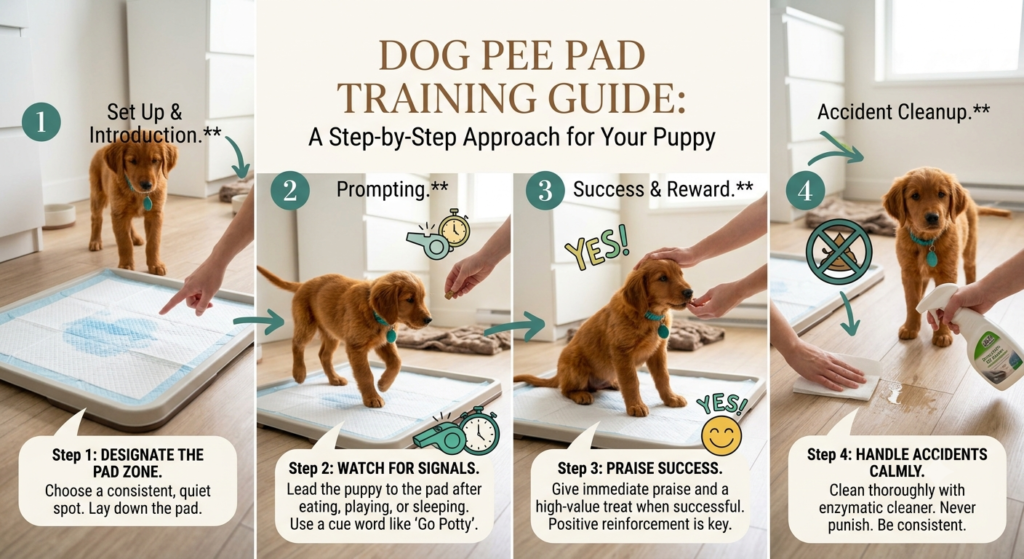
How to Pad Train a Dog: Step-by-Step(Pad Training a Dog)
Follow these steps carefully and consistently. Most dogs are pad trained within 2 to 4 weeks.
1
Restrict Your Dog’s Access to the House
Keep your dog on a leash with you, in a playpen on an easy-to-clean floor, or in a properly sized crate. This prevents accidents in the wrong places. Do not allow free roaming until they are fully trained — accidents in wrong spots will make them return to those areas again and again.
2
Introduce the Pad and Choose a Command Word
Place the potty pad in a consistent spot — a bathroom or laundry room works great. When your dog looks like they’re about to go (sniffing, circling), calmly say your chosen command like “Go potty” and guide them to the pad. Use the same word every single time.
3
Reward Immediately When They Use the Pad(Pad Training a Dog)
The moment your dog finishes on the pad, give them lots of praise and a small treat right away. Timing is everything — the reward must come immediately after they go, not a minute later. This is how they make the connection.
4
Set Up an “Alone Room” When You’re Away
When you can’t supervise, place your dog in a small bathroom with pads covering the entire floor. Leave water, toys, and a bed. After 2–3 days, remove one pad. Every 2 days, remove another pad. Continue until only one pad remains. If accidents happen outside the remaining pad, start over.
5
Feed on a Strict Schedule(Pad Training a Dog)
Put the food bowl down, wait 15 minutes, then remove it — even if your dog didn’t finish. Do this twice a day. A predictable feeding schedule means a predictable bathroom schedule, making accidents much less likely.
6
Take Them to the Pad Regularly
Go to the pad every 2–3 hours, and always after sleeping, eating, and playing. Keep your dog on leash and stand quietly at the pad for up to 5 minutes. If they don’t go, calmly walk away and try again in 15–20 minutes.
7
Gradually Give More Freedom(Pad Training a Dog)
After about 2 weeks with no accidents, start giving your dog a little more freedom in the house. Continue rewarding every successful pad use. If accidents return, go back to restriction and start the steps again.
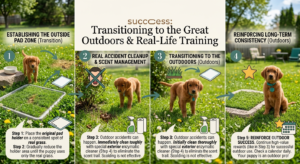
When to Take Your Dog to the Pad
Timing is the secret to fast pad training. Always take your dog to the pad at these moments:
🌅
After Waking Up
First thing every morning and after every nap
🍽️
After Every Meal
Within 15 minutes of finishing food
🎾
After Playtime
Physical excitement triggers the need to go
⏰
Every 2–3 Hours
Even if they don’t seem to need it
🌙
Before Bed
Always the very last thing at night
😟
When Anxious
Stress and excitement can trigger sudden urination
Common Pad Training Mistakes to Avoid
😡
Punishing Accidents
Never yell or scold. It teaches your dog to hide accidents, not stop having them.
🚶
Too Much Freedom Too Soon
Letting your dog roam freely before they’re trained = guaranteed accidents.
📍
Moving the Pad Around
Keep the pad in one consistent spot. Moving it confuses your dog.
⏳
Giving Up Too Early
Pad training takes 2–4 weeks. Stay consistent even when it feels slow.
🧹
Wrong Cleaner for Accidents
Regular cleaners don’t remove scent. Always use enzymatic cleaner or your dog will return to the same spot.
🎁
Delayed Rewards
Rewarding even 30 seconds too late means your dog won’t connect the treat to using the pad.
⚠️ Never Do This During Pad Training:
- Never rub your dog’s nose in an accident — this causes fear and confusion, not learning.
- Never punish after the fact — dogs don’t connect past actions to current punishment.
- Never skip reward — even one unrewarded success slows down training.
- Never allow unsupervised access to the whole house until fully trained.
Pro Tips to Speed Up Pad Training
💡 Trainer-Approved Tips
- Use scented pads — the attractant scent encourages dogs to go on the pad instinctively.
- Leave a slightly used pad in the spot — the familiar smell helps your dog recognize where to go.
- Place the pad near the door if you plan to eventually transition to outdoor training later.
- Use a consistent command word — “Go potty,” “Pad time,” whatever you choose. Say it every single time.
- Keep a training log — note times your dog successfully uses the pad to spot patterns.
- Be extra patient with small breeds — they have smaller bladders and may take a bit longer.
Frequently Asked Questions (FAQs)
❓ How long does pad training a dog take?
Most dogs are reliably pad trained within 2 to 4 weeks with consistent effort. Some small breeds or older dogs may take a bit longer.
❓ Can you pad train an older dog?
Yes! Older dogs can absolutely learn pad training. It may take a little longer than with puppies, but with patience and consistency, it absolutely works.
❓ How many pads do I need?
Start with enough to cover the entire floor of your dog’s “alone room.” Then gradually remove pads every 2 days until only one remains in the designated spot.
❓ My dog keeps missing the pad — what do I do?
Go back to basics: restrict access, increase supervision, and take them to the pad more frequently. Make sure you’re using an enzymatic cleaner on any accident spots so they don’t return to them.
❓ Can I train my dog to use both a pad and go outside?
Yes, but it can be confusing for some dogs. It’s easier to choose one method and stick with it. If you want to eventually switch to outdoor-only, place the pad near the door first, then gradually move it outside.
❓ What’s the best type of potty pad?
Look for pads that are absorbent, leak-proof, and scented with attractant. Using a pad holder or tray keeps it in place and makes cleanup easier.
Final Thoughts
Pad training a dog is one of the most practical solutions for apartment living, cold climates, and small breeds. With the right setup, a consistent schedule, and lots of positive reinforcement, most dogs learn quickly.
Remember — patience is everything. Accidents are part of the learning process. Stay calm, stay consistent, and celebrate every success on the pad. Your dog is trying their best — and so are you! 🐾